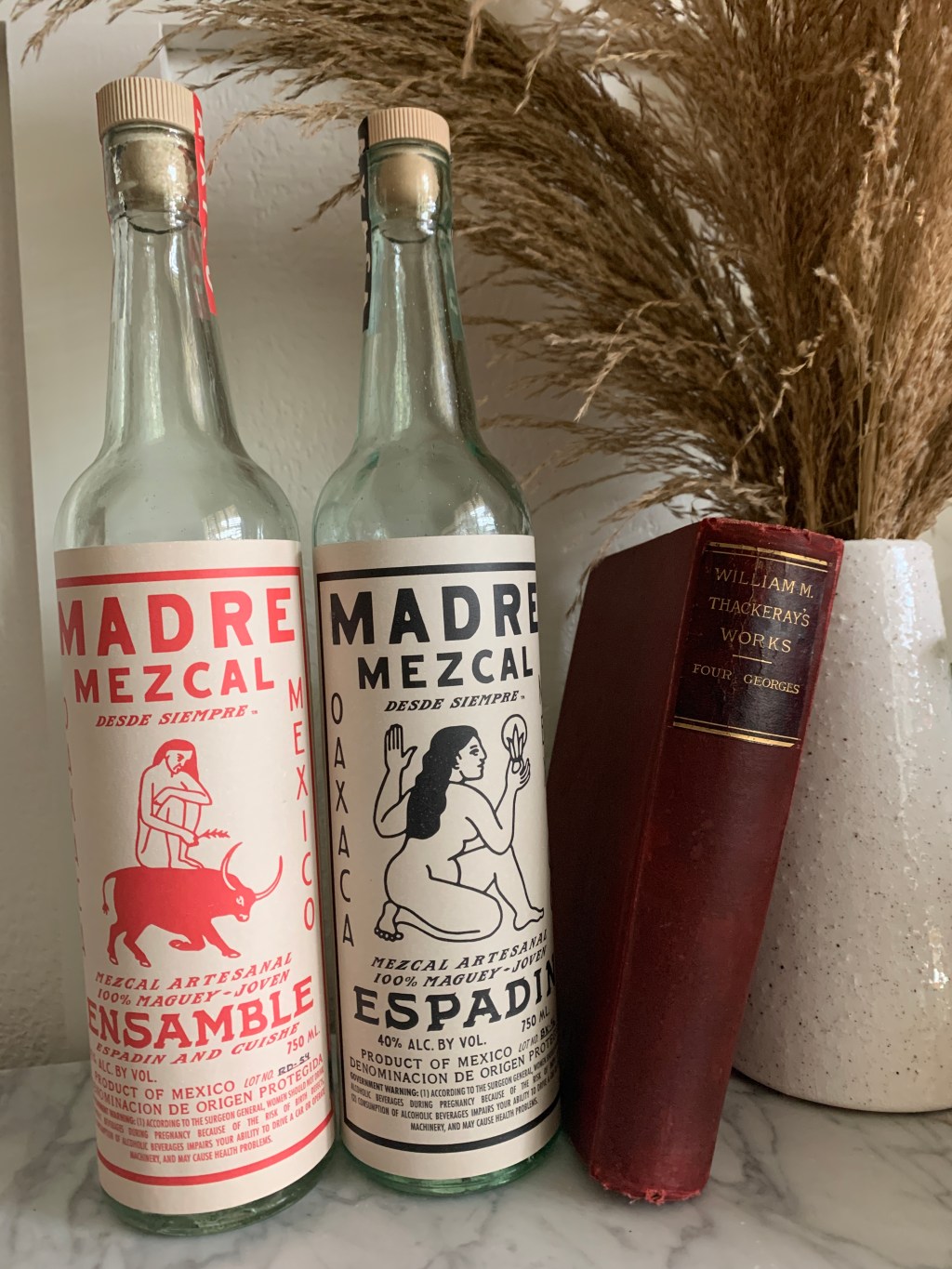
Mezcal is the mother of all agave spirits.” – Danny Mena
Howdy y’all,
The days are lasting a lot longer and waking up at 5 AM to study for CPA exam portions is getting old. I hope that I can pass a section before June and really get motivated to knock this thing out.
While life is a little stressful with studying, working, finding time to post, and making time to eat and drink anything and everything, there is always some time on a Sunday night to close up shop and relax while sipping on a glass of mezcal.
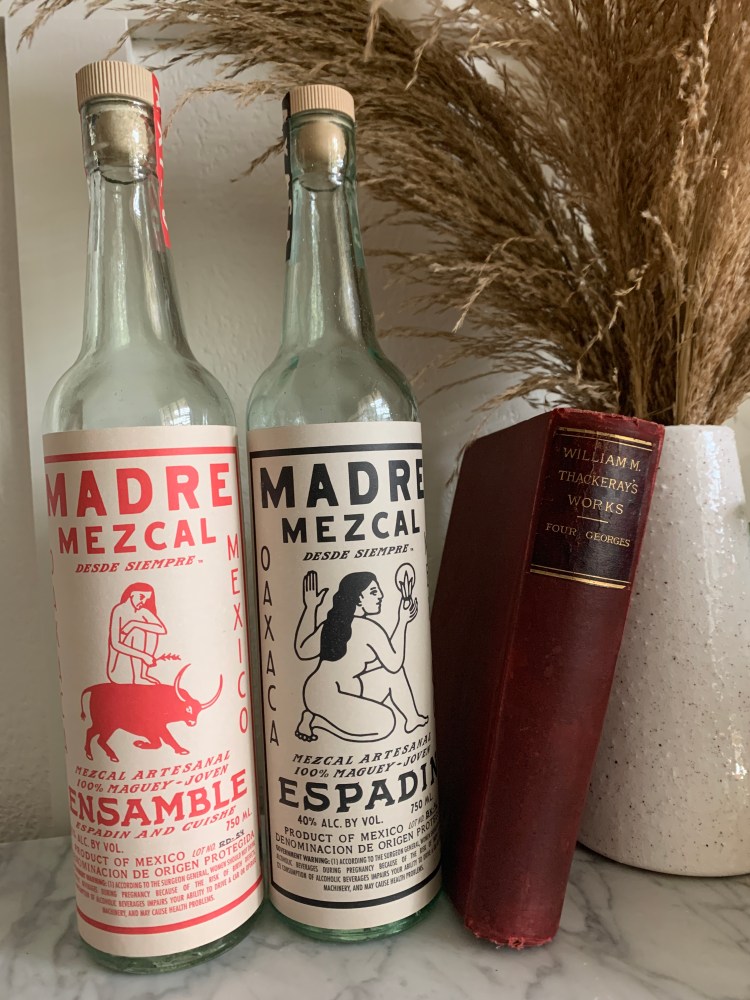
If I haven’t mentioned before Mezcal is my favorite spirit on the planet. It is unique, and flavorful, comes in a bajillion varieties, and helps ground me when I feel lost in the clouds.
“You mean that crap that smells like an alcohol-soaked cigar?”
Sure, you’ve given it a whiff and smelled the burnt gasoline and smoke assuming that this is some disgusting higher-proof tequila. For those uninformed here is a crash course in some of the highlights of my favorite beverage. After you’ve increased your knowledge on this fantastic spirit I’ll share what I am currently drinking.
“But Will, isn’t Mezcal just a different tequila?”
Nope! Consider Mezcal and Tequila brothers in the same family tree where tequila has a single branch, Blue Agave, and Mezcal has many hundreds of branches (Espadin, Tobala, Cuishe, etc.).
Agave Spirit Types
Tequila – Tequila can only be produced in the state of Jalisco and some municipalities in Guanajuato, Michoacan, Nayarit, and Tamaulipas. Sweet Blue Agave, which is easily cultivated and farmed in mass quantities, is the typical agave used in crafting the tequila we all know and love.
Mezcal – Like Tequila, Mezcal can only be classified as such if made within specific designated regions of Mexico: Oaxaca, Durango, Zacatecas, San Luis Potosi, Guanajuato, Guerrero, Puebla, Michoacan and Tamaulipas. Mezcal can be made from any species of agave and flavors range from herbal and citrus, to spicy and floral. Some agaves are cultivated and farmed but there are also wild agaves that are harvested in the wild.
Agaves and Varieties
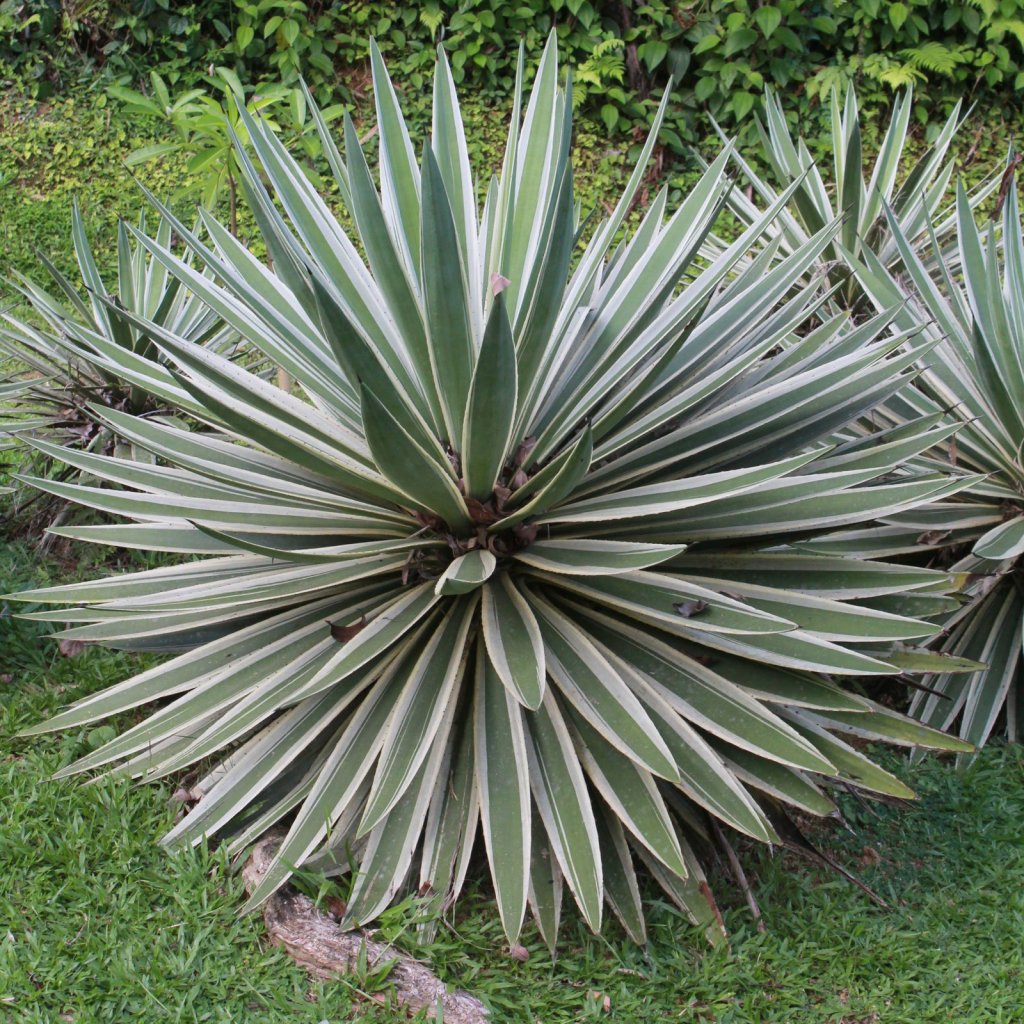
Each individual species of Agave (Ex. Agave Kawinskii) may additionally contain a number of different agave varieties (Ex. Cuishe, Baicuishe, Madre Cuishe, Barril, Tobaziche, Verde), which are genetically very similar, but not identical. These varieties are often referred to using non-scientific common names, which can be confusing. The most common agave used in mezcal production is Agave Angustifolia due to its ability to be cultivated and grown on ranches in mass quantities.
- Espadin – Espadín accounts for somewhere between 80 and 90 percent of mezcal production since it is easily cultivated. Espadín is less fibrous than other varieties, making it easier to break down after roasting.
- Cuishe, Baicuishe, Madre Cuishe, Barril, Tobaziche, Verde – Often harvested wild rather than cultivated.
- Pechuga – Traditionally made for special celebrations, Pechuga is a particular style of mezcal. A flavored, re-distilled version of the spirit, its name comes from the practice of including a chicken or turkey breast in the still during a second distillation. (Pechuga means breast in Spanish.) As vapor passes through the meat, which is hung above the boiling mezcal, it infuses the spirit with full-bodied, earthy flavors. A range of other flavor-giving ingredients is also traditionally added to the boiling spirit, including fruits, vegetables, and spices.
“Will… this sounds like a lot to take in. Can you explain like I am a five-year-old golden retriever or something?”
… Fine, take a pretty Mexican-grown spiky plant and smoke it in a covered pit for a while, smush it until a liquid comes out, let that liquid sit in a barrel for a few weeks, and boil that liquid. Bingo-bango, you’ve made Mezcal. You can read about my adventure to Oaxaca for more details.
I will stress that I am completely underrating the Agave which deserves its own post. It is one of the most impressive plants on the planet and I admire how the ancient and current cultures today utilize it.
Now onto the bottle I cracked open tonite: Madre Mezcal.
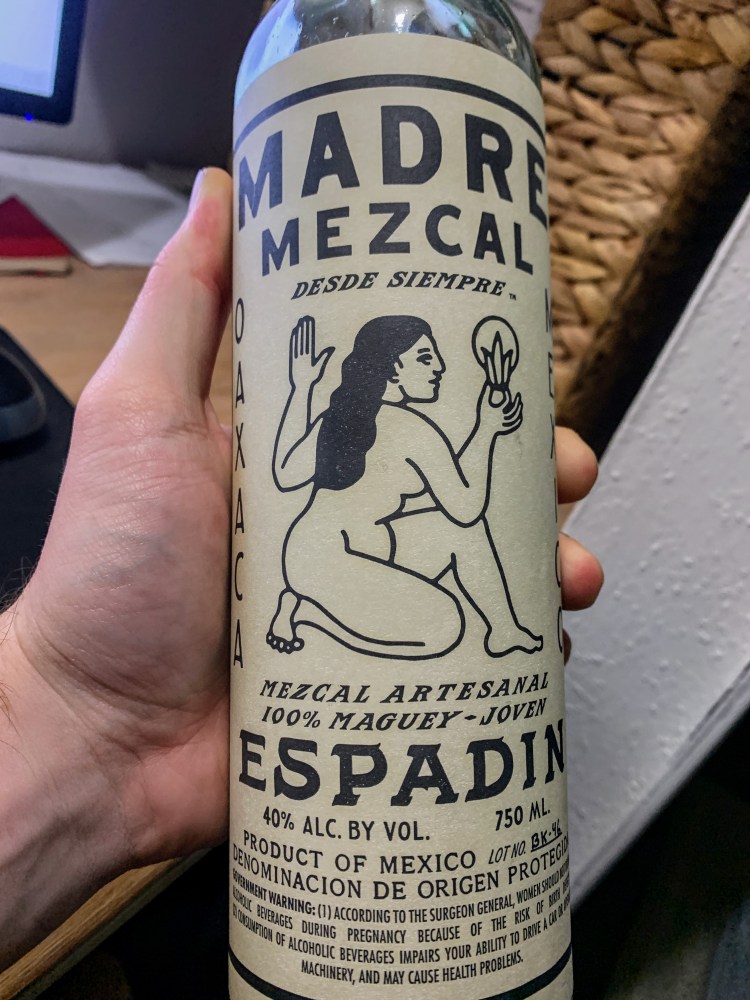
I would argue that this is a perfect entry bottle for any beginner looking to take a dip into the Mezcal universe. The bottle is priced around $35-$40 depending on your liquor store of choice, so it doesn’t break the bank. Another reason why this bottle is great is that it is a good baseline. I’ve had the liquidity and the time to try out all sorts of different types of Mezcal, and there are winners and losers. I like to think of Madre Mezcal as a great middle-ground for beginners to learn what tastes great and what tastes bad.
Here are my raw notes that I had to think about in the moment.
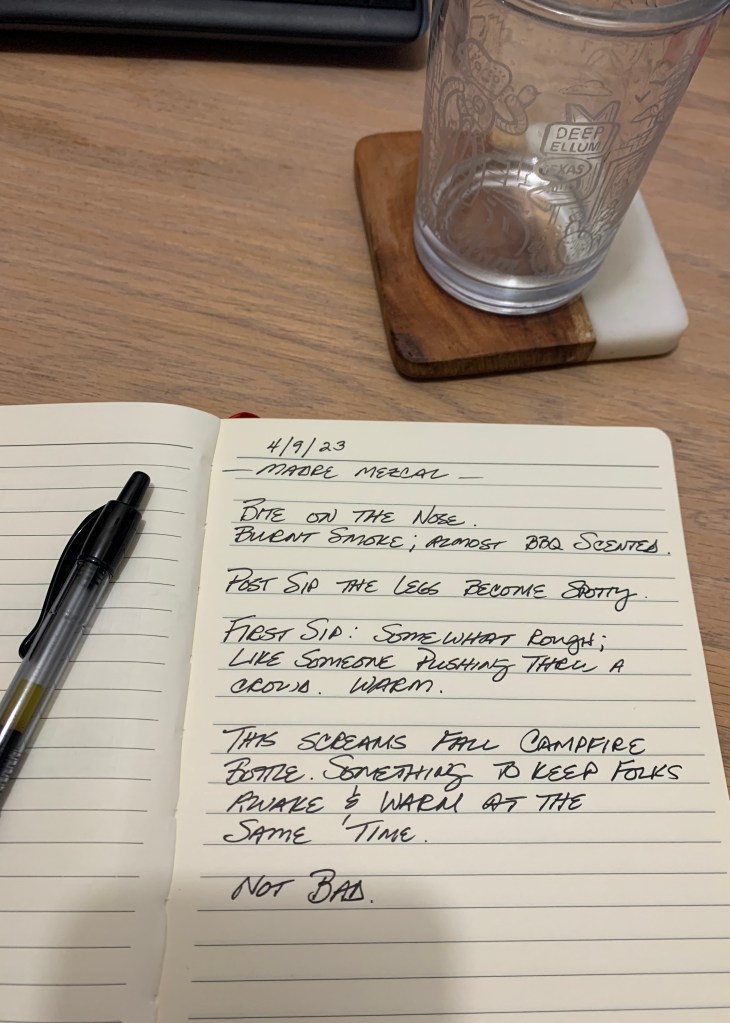
Bite on the Nose. Burnt Smoke; almost BBQ scented.
Post sip the legs become spotty.
First sip: Somewhat rough, like someone pushing thru a crowd. Warm.
This screams Fall campfire bottle. Something to keep folks awake & warm at the same time.
Not bad.
If sipping straight isn’t your thing add some ice, if the bite is too much squeeze some lime juice. No one made the rules on how to make the thing you want to try better, and if at the end of the day it’s not your bag that’s okay too at least you tried and experienced something new.
So grab a bottle and let me know what y’all think. Don’t forget to check out my review on 1530 Mezcal Artesanal as well.
Cheers,
William



 W Is For Will